BBC 04:00
BBC 11:00
BBC 14:00
BBC 18:00

Radio Daljir

Radio VOA
 
Allpuntland
Allcayn
Allgaracad
Aminarts.com
Alcarab
Awdalnews
Allidamaale
Allwariye
Allsanaag
Abaaqaroow
Afnugaal
Afro-Arabbooks
Aayaha.com
Agabso.com
Aflax
Allwadani
Altaqwaa.com
AllSomali.com
Awrboogays
BaadiyeNews
Baydhabo Online
Bari Media
Bosaso Media
Boocame
Biyokulule
Bulsho
Buruc News
Carmooyin
Calanka
Ceegaag
Cibaado
Coscompany
Current Analyst
Dadka.net
Dailysn
Dayniile
Dhahar.com
Dhanbaal
Doollo
GalgalaNews
Gedonet.com
Godeynews.com
Golkhatumo.com
Hadaaftimo
Halgan.net
Halganews
Hiiraan.com
HornAfrik
HorseedMedia
Jamhuuriya
Jidbaale
Juurile.com
Iibka.com
Maanhadal
Markacadeey.com
Markacadey.net
Maaryaa.net
Miisaanka
Nomad Diaries
Puntlander
Qarannews
Qardhaawi
Radiobuuhoodle
Radio Garoowe
Radio Ogaal
Sbclive
Shabelle
SomaliFans
Somaliweyn
Somalitalk
Somaliland Org
Sanaag Post
UniversalTV
Wardheernews
Warka
Waayaha
Widhwidh
Xamuure Online
Xargaga Online
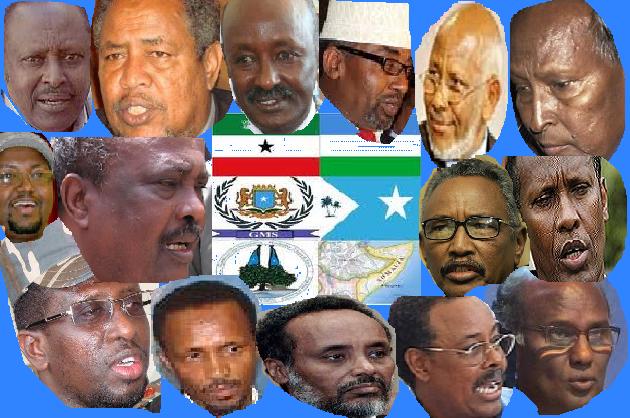

Carrab Lo'aad Caws Looma Tilmaamo

By C.S.Ismaaciil


Running as a Nation Watches
Roobdoon Forum
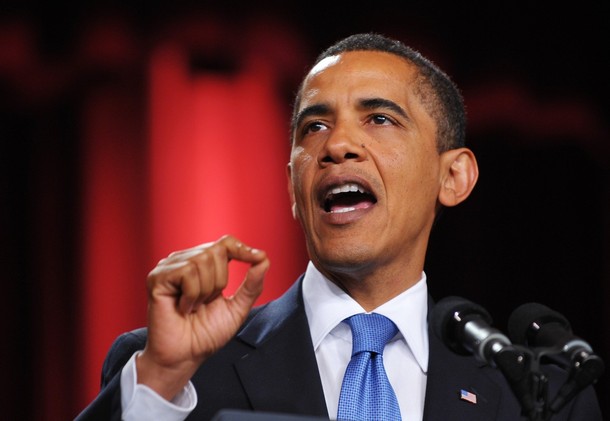
Obama
New Beginning
in Muslim World
Islaamist
Islamist Vs Islamist
Waliid
Hammiga Waliid & Hangoolka UNPOS

QP
Puntland: A Quisling Scheme
Roobdoon Forum


Part II
Somali `Travelers`: The Baddest, Holiest Gang
David Axe and John Masato Ulmer
World Politics Review
September 11, 2009


A Somali coffeeshop in Minneapolis, August 2009 (Elliot Dodge deBruyn)


How young Somali immigrants searched for belonging, and found jihad. Second of a three-part series. Part I  can be found below. Part III will appear next Friday.


When 26-year-old Shirwa Ahmed, a Somali-born immigrant living in Minnesota, blew himself up in Puntland, Somalia, on Oct. 29 last year, he became the very first American suicide bomber, and a harbinger of a looming crisis. Ahmed sneaked into Somalia in late 2007, followed by potentially scores of other young Minnesotan Somali-Americans.


Since the first wave of “travelers,” as they are known, left America, Minnesota has become a quiet battleground. The miniature, homegrown war on terror has pitted government authorities and their allies in the Somali community against fiery youths, hardline mosques and angry, alienated Somali immigrants.


Both sides claim to represent the voice of Minnesota`s roughly 70,000 Somalis. All agree, however, that the issue has its roots in broken families, neglected kids, alleyway bullying, and many Americans` all-too-casual racism and xenophobia. In our post-9/11 world, Somali immigrants` race and faith “pushed those buttons of fear,” says Dr. Peter Rachleff, a professor specializing in immigration, labor and African-American history at Macalester College, in St. Paul. And the backlash that fear created has contributed to a sense of alienation among many Somalis that sometimes results in desperate actions.


In America, Somali immigrants represent a minority within a minority within a minority. They`re black. They`re native Africans. And they`re Muslims. “Somalis face language and cultural barriers,” explains Abdirizak Bihi, a Somali community organizer and uncle of one of the travelers. Bihi`s 17-year-old nephew Burhan Hassan sneaked into Somalia in November, and reportedly died of a gunshot wound seven months later.


Many young Somali-Americans live in broken homes -- their fathers either dead or working abroad. “We have the highest [number of] single-mom households in this community,” Bihi says. “It`s very bad, especially for the boys. They need a mentor.”


Omar Jamal, a Somali-born civil rights advocate, estimates half of missing fathers were killed in the Somali civil war. The absence of a strong father figure might make young Somali-Americans “more susceptible to recruitment from charismatic male authority figures,” FBI Associate Director Philip Mudd said.


To be clear, we don`t really know who`s doing the jihad recruiting. Jamal and Bihi say the Abubakar mosque is involved, especially through its youth programs, which are basically Islamic versions of Christian youth groups. “Fiery sermons and fiery teachings and indoctrination -- radical indoctrination -- were definitely taking place,” Bihi says. All of the travelers, he adds, “were prominent members of the mosque.” Fueling Jamal`s and Bihi`s accusations, a federal grand jury reportedly subpoenaed a female organizer of the youth programs. “People . . . blame her for the missing kids,” Bihi says.


The mosque denies any involvement in the travelers` recruitment, and several new non-profit groups have sprung up to defend it against the accusations, including Somali Voices and United Somali Movement. The Minnesota chapter of the Council on American-Islamic Relations has also come to the mosque`s defense. Unfair accusations against the mosque are amplified by the media, says 17-year-old Ackowme Abokar. He accuses the media of “attacking” his religion.


What`s clear is that Abubakar is one of the few activity centers available for Somali youths in Cedar-Riverside -- and a ready stand-in for missing parents and mentors. The mosque is also a refuge for youths whose lives outside the mosque can be confusing, discouraging, and even dangerous. All Somali-Americans, but especially boys and young men, face levels of violence -- and an allegedly tepid government response -- that most Americans would find shocking.


Feeding resentment is the widespread sense that the government turns a blind eye to crime targeting black, Muslim immigrants. Last year in Minneapolis, Somali youths staged protests, accusing police of being slow to investigate the murder of Somali university student Ahmednur Ali. And the death of Muhidin Yahye Mumin, a 42-year-old Somali health worker, following a fight that broke out last October between Somalis and a group of white men has also become a rallying cry for the Somali community.


In Somalia, “justice is swift,” Bihi says -- and it often takes the form of immediate reprisal by the victim`s clan against the clan of the offender. That kind of eye-for-an-eye justice just isn`t the American way. But the American way -- filing charges for alleged crimes, then navigating a carefully balanced judicial process -- hasn`t worked for many Somalis, as the direction of the Mumin and Ali cases might indicate.


Ironically, the legal system often works quite swiftly when Somalis` immigration status is the focus. That`s something Omar Jamal knows all too well. Jamal was born in Somalia and came to the United States in 1997, when he was 30 years old. Today, the balding father of four runs the non-profit Somali Justice Advocacy Center in Minneapolis.


In March 2003, federal agents arrested him on charges of lying about his background to U.S. immigration authorities and using a fake passport to enter the country. His arrest was part of a surge in retroactive immigration investigations following the 9/11 attacks. Jamal handily beat all the charges. Other members of the Twin Cities Somali community weren`t so fortunate. Ten were deported in 2002, sparking outrage in the community.


Looking around their communities, many Somali-Americans see a pattern of abuse and neglect, both official and unofficial. “Prevalent discrimination,” is how Sahra Mohamud, a member of the Twin Cities` United Somali Movement, describes it. “There`s definitely a feeling of ghetto-ization,” fellow member Ramla Bile adds.


For protection and justice, many young Somalis turn to gangs with names like the “Hot Boyz” and the “Somali Mafia.” Minneapolis community organizer Shukri Adan estimated in a report to the city that between 400 and 500 Somali youths are in gangs, according to the Associated Press.


What`s striking is the similarity between the Somali gangs and Shabab, which not coincidentally means “youth” in Arabic. Like the Somali gangs in Minneapolis, Shabab originally formed to defend innocent victims of violent crime, before evolving into the armed wing of an Islamic political movement from which it subsequently split. Today, the group mainly functions as a loose alliance of mercenaries, religious zealots, criminals and, yes, street gangs.


During our visit to Mogadishu in November 2007, city residents told us they feared the gangs more than they did any Shabab army, for the gangs would stop cars and steal drivers` cash and cell phones. Over the years, Shabab has become what it once despised. So, too, have the Somali-American gangs. Formed to protect Somali youths from white violence, the Minnesota gangs are now suspects in a number of killings . . . of Somalis.


For young Somali-Americans already deep into gang culture, the step to joining a group that is, in essence, just a bigger, better-armed and more strictly religious gang, based in another country, is a short one. Even FBI official Mudd acknowledges that “a range of socioeconomic conditions -- such as violent youth crime and gang subcultures [has] played some role in the recruitment process.”


For many of Minneapolis` Somali travelers, it was the Ethiopian invasion of Somalia that finally propelled them to take that next step, and answer the call to jihad.


Part III of this World Politics Review three-part series will explore the travelers` perceptions of an “imaginary” Somalia, and their rapid disillusionment once they saw the country for what it was.


David Axe is an independent correspondent, a World Politics Review contributing editor, and the author ofWar Bots.” He blogs at War is Boring. His WPR column, War is Boring, appears every Wednesday.


John Masato Ulmer is a freelance journalist.


Part I
Somali `Travelers`: The Holiest Gang
David Axe and John Masato Ulmer
World Politics Review
September 04, 2009


An apartment complex in Cedar-Riverside, a Minneapolis neighborhood where many Somalis live (Elliot Dodge deBruyn).


How young Somali immigrants to the U.S. searched for belonging, and found jihad. First of a three-part series.


On Oct. 29 last year, Shirwa Ahmed drove a car full of explosives up to a government compound in Puntland, a region of northern Somalia, and blew himself up. The blast -- apparently orchestrated by al-Shabab, an Islamic militant group with ties to al-Qaida -- was part of a coordinated attack in two cities that killed more than 20 people. A BBC reporter described body parts flying through the air.


The attackers were “not from Puntland,” said Adde Muse, the regional leader. He couldn`t have been more right. For most of his life, the Somali-born Ahmed had lived in Minnesota, where he was more accustomed to frigid winters than to the dry, yellow sands of East Africa. The 26-year-old former truck driver with the fluffy beard -- “as American as apple pie,” according to one acquaintance -- was the very first American suicide bomber, and a harbinger of a looming crisis. Since Ahmed sneaked into Somalia in late 2007, potentially scores of other young Minnesotans have followed him.


By all accounts, Ahmed hadn`t come to Somalia to die. His motive was apparently to help Shabab defend Somalia against an invading Ethiopian army. The defense of Somalia was a popular cause among many Somalis living in the U.S., Europe and the Middle East -- especially among young people. On the long, winding journey from Minneapolis` streets and parks to Somalia`s bleached sand and searing sun, Ahmed`s original impulses had gotten tangled up with Shabab`s al-Qaida-style religious extremism.


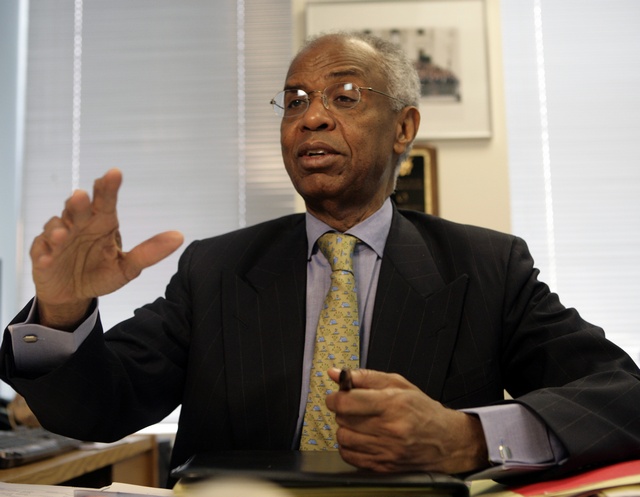
But it`s possible that even the Ethiopian invasion was just the political cause that gave shape to Ahmed`s deeper desires. Many of the young men recruited by Shabab got their start in Minneapolis street gangs that mix Somali patriotism, religious fervor and an almost familial structure. The gangs give young men a sense of belonging they can`t find at home, at school or in the community. That belonging was a powerful and dangerous thing for Minnesota`s Somali recruits, for it cloaked a radical political sensibility that eased the men into jihad. Radical mosques perhaps only reinforced that indoctrination. “They`ve been disillusioned, indoctrinated and misled,” says Omar Jamal, a civil rights advocate in Minneapolis.


Shabab`s savvy recruitment videos, widely available online, probably played a role in convincing young men to take that final step, and board a plane ultimately bound for Somalia. But community leaders as well as friends and family of the recruits say there are also Shabab agents -- most of them men, apparently, and veterans of the civil war -- hiding out in Minneapolis, perhaps connected to hardline mosques.


But by the time recruiters reached them with their mixed message of patriotism and holy war, Minnesota`s Somali boys had already been primed for desperate deeds, by years of taunting, harassment, even physical assault in their hometown. American society has made it difficult for Muslim, African immigrants to find security and a sense of belonging. So they sometimes go looking for these things in gangs and extremist churches.


In other words, the Twin Cities` jihadists did not spring from a vacuum. They are, in part, products of an America that mostly rejected them, leaving the belonging that comes from holy war as an attractive alternative.


In the last two years, Shabab`s mysterious terror recruiters have found fertile ground in Minneapolis` Cedar-Riverside. The Somali immigrant neighborhood is anchored by the Abubakar As Saddique mosque where many Somalis worship, the Towers apartment complex where they live, and the local Wal-mart where they work. More than a third of the roughly 200,000 Somalis in America live in Minnesota -- and many of those live in Cedar-Riverside. It`s a verdant, sometimes frigid, slice of Mogadishu in the heart of the American Midwest.


No one`s sure exactly how many Americans have gone back to Somalia to fight. Special Agent E.K. Wilson of the Twin Cities FBI says that nationwide, they number in the “tens.” Jamal pegs the number in Minneapolis at 17 or 18. Some trusted Somali sources say even the FBI`s count is too low. “More than accounted for, are there fighting,” said one Somali resident of Minneapolis. He requested anonymity, for fear his comments might draw reprisal from some of his neighbors, who are unhappy seeing their community`s business dredged up by the press.


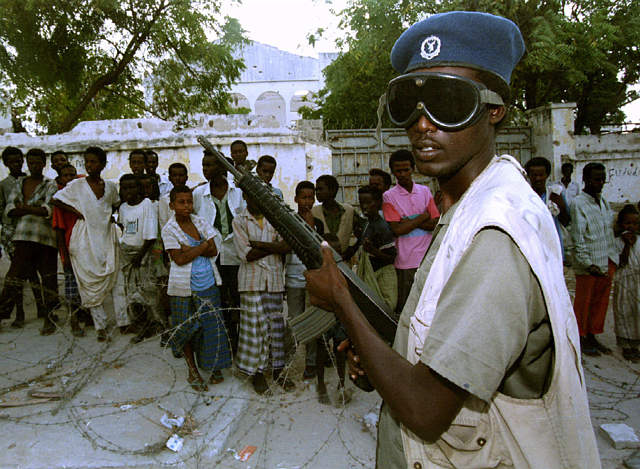
Regardless of their precise numbers, the “travelers” -- the FBI`s term for the jihad recruits -- have the U.S. government worried. It`s not that war is anything new for Somalis. Their homeland has suffered decades of violence. The current round of fighting began in 1991, when clan armies overthrew brutal dictator Siad Barre. Somalia subsequently splintered as warlords, crime gangs and pirates divvied up slices of the former British and Italian colony. Hundreds of thousands died, some from the fighting, some by starvation. Periodic foreign interventions have punctuated the clan bloodshed. In 1993, 18 American soldiers died during a botched peacekeeping operation.


But for all the suffering and brutality -- and despite the occasional al-Qaida foray into Somali clan politics -- until that day in October, no Somali had blown himself up. Suicide attacks were “completely nonexistent” in Somalia before Ahmed`s blast, according to Jamal. “Somalis have been fighting along clan lines a long time, but never has it occurred to someone to carry out a suicide bombing.” A radicalized American helped elevate Somalia`s violence to levels seen in Iraq and Afghanistan.


David Axe is an independent correspondent, a World Politics Review contributing editor, and the author ofWar Bots.” He blogs at War is Boring. His WPR column, War is Boring, appears every Wednesday.


John Masato Ulmer is a freelance journalist.


sawirro
Sawirro Somaliya

/
Bosaso

muqdisho
Muqdisho of Yesteryears and Today’s Muuq-disho


© Copyright   BiyoKulule Online All rights reserved®
Contact us administrator@BiyoKulule.com or roobdoon2000@yahoo.ca