BBC 04:00
BBC 11:00
BBC 14:00
BBC 18:00

Radio Daljir

Radio VOA
 
Allpuntland
Allcayn
Allgaracad
Aminarts.com
Alcarab
Awdalnews
Allidamaale
Allwariye
Allsanaag
Abaaqaroow
Afnugaal
Afro-Arabbooks
Aayaha.com
Agabso.com
Aflax
Allwadani
Altaqwaa.com
AllSomali.com
Awrboogays
BaadiyeNews
Baydhabo Online
Bari Media
Bosaso Media
Boocame
Biyokulule
Bulsho
Buruc News
Carmooyin
Calanka
Ceegaag
Coscompany
Dadka.net
Dailysn
Dayniile
Dhahar.com
Dhanbaal
Doollo
GalgalaNews
Gedonet.com
Godeynews.com
Golkhatumo.com
Hadaaftimo
Halgan.net
Halganews
Hiiraan.com
HornAfrik
HorseedMedia
Jamhuuriya
Jidbaale
Juurile.com
Iibka.com
Maanhadal
Markacadeey.com
Markacadey.net
Maaryaa.net
Miisaanka
Nomad Diaries
Puntlander
Qarannews
Qardhaawi
Radiobuuhoodle
Radio Garoowe
Radio Ogaal
Sbclive
Shabelle
SomaliFans
Somaliweyn
Somalitalk
Somaliland Org
Sanaag Post
UniversalTV
Wardheernews
Warka
Waayaha
Widhwidh
Xamuure Online
Xargaga Online

Carrab Lo'aad Caws Looma Tilmaamo

By C.S.Ismaaciil


Running as a Nation Watches
Roobdoon Forum
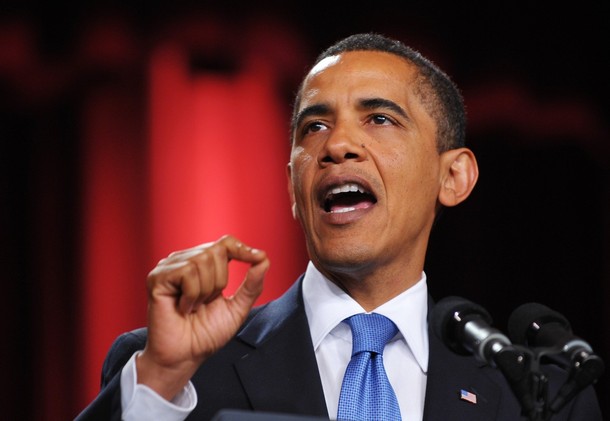
Obama
New Beginning
in Muslim World
Islaamist
Islamist Vs Islamist
Waliid
Hammiga Waliid & Hangoolka UNPOS

QP
Puntland: A Quisling Scheme
Roobdoon Forum


Pakistan: Article Questions Parliament`s Stand on US Presence in Country
Nawa-e Waqt
Tuesday,
September 15, 2009


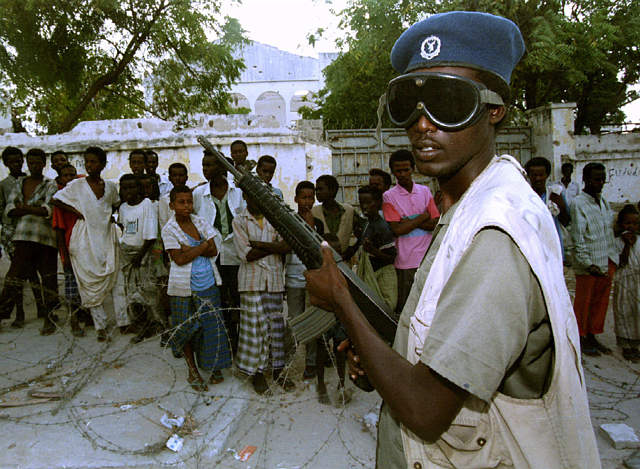
Mogadishu 1993


Article by Rafiq Dogar: “Role of NGOs in Collapse of Somalia


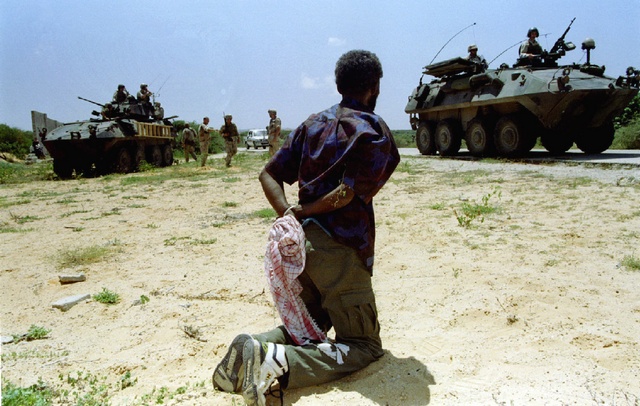
It would be a great service to mankind if someone evaluates the services provided to humanity by the United Nations and its proprietor, the United States, given that wherever foreign troops are located under the UN auspices, they do irreparable damage to the political stability of that country. What was the situation in Somalia when the UN troops and NGOs arrived there? The whole world knows about the impact of UN troops and NGOs on Somalia. When I went to Mogadishu, Somalia, I saw foreign troops, under the UN auspices, busy in reconstruction and development of that country. Whatever I saw, heard, and wrote during my stay, is being presented here for the Pakistanis to reflect upon. It is a long story but I will try to cut it short so that you can read it with interest. The task of distributing relief items in Somalia among people affected by war, hunger, misery, and drought was assigned to NGOs. The United Nations and other donor agencies provided relief goods, which was delivered under the security of UN troops. The actual distribution of these relief goods among the affected people was done by NGOs. Troops from different countries reached Somalia under the UN auspices and on the orders of the US President George Bush to help the NGOs in the relief work. Some goods were looted by war gangs. The US President and the United Nations were not upset about the turmoil in Somalia; rather they were concerned that all the relief goods were not reaching the needy. The Western media, particularly television, would find needy persons, take their interviews and photographs, which they would show to the whole world to create a wave of sympathy. They showed the total alienation of the ruling Somali elite toward the misery of their own people, who were dying of hunger, while being engaged in internecine fighting and profiteering. They were even looting relief goods that had been sent by the world community for these dying and destitute people. After this media hype, President Bush decided to send the US and multinational troops on a humanitarian mission for the safe delivery of relief goods arriving from abroad for the needy. These NGOs, which were busy in relief distribution under the shadow of American guns, all belonged to and were controlled by Christians. Only a couple was from Islamic countries and belonged to Muslims. In addition to NGOs, the Church World Service and other missionary institutions were also active. The Church World Service set up small dispensaries and hospitals in Somali villages. It provided education and training to the local population, especially women, and set up schools while arranging for potable water as well. In addition to providing several other facilities to the people affected by war, it provided job opportunities to the people as well.


One day, in Nairobi, I visited an auto workshop with a friend, Nasim Khawaja. In this land of black people, I was surprised to see a white man, wearing dirty clothes, fixing a car engine. He kept changing his posture under the vehicle. Sometimes he would stand up to tighten the nuts and bolts of the vehicle. I was really impressed with his skills and praised him for his efforts. My friend told me that the white man was an American and a missionary. He had come to preach his religion and whatever he earned by repairing vehicles, spent on the propagation of his faith. He taught black boys how to repair vehicles and after they were trained in the trade, he would convert them to Christianity. Then he would help them to set up their own workshops so that they could earn a decent living. Given that most of the blacks were already Christian, I wondered why he was preaching to Christians. Khawaja told me that he was strengthening those who were already Christians and converting local jungle tribes to Christianity who were not converted yet. You can imagine the working style of missionaries and the Church World Service in a Muslim-majority country like Somalia. It is a country that has been suffering in a war created by its own leaders, a country where there are no jobs or means of livelihood.


The most important responsibility of the US and other troops in Somalia was to provide security to NGOs and ensure that no one hindered their work. If we study the10-12 year period before this relief work started, we find that, along with Somali ruling elites, these NGOs also played a role in promoting hunger, turmoil, and drought in the country. The United Nations, its different wings, the world media and governments, politicians, journalists, and analysts, all of them view the activities of these NGOs from one angle only, namely, that they are devoted to serving the needy. God knows why people do not look at the political intrusion of these NGOs. If you look at them objectively, you will discover that wherever foreign troops enter under the UN auspices, NGOs follow along with Christian missionaries and wherever these NGOs reach, there is political instability and unrest in that society. Not surprisingly, the number of Christians increases in that society. If you look at the United Nations from this angle, you will discover that it is an undercover missionary institution dedicated to the propagation of Christianity, working with the support and backing of the western world or to put it correctly, the entire Christian world.


NGOs entered Somalia in the early 1980`s, which means some eight to ten years before the fall of the government of Mohammed Siad Barre. The government was very strong at the time and was crushing its opponents ruthlessly. Barre was fed up with Russian socialism and was trying to develop relations with the United States and the West. Russian power and its status as a super power were still strong. The United States was using all its resources, including diplomacy, politics, conspiracy and aid, to rid Somalia of Russian influence. The United States wanted to use the Somali seaport and airport in Berbera.


Siad Barre attacked his opponent tribes, which led many peasant tribes to flee from their lands. The lands vacated by these peasants were not cultivated, which led to a severe food shortage in Somalia. But this food shortage was not so severe that the government could not make up for it with its own resources. At that time the United States was facing a problem of dumping its excess wheat. It trapped Barre under the threat of drought in Somalia and compelled him to accept the food aid. Both parties were playing games. Barre wanted to tackle the food crisis faced by his country and stabilize his government, while the United States wanted to obtain rights to the sea port of Berbera and Kismayo. Plus, it was getting a buyer for its excess wheat. The formula decided for the distribution of the wheat allowed many NGOs into Somalia. Most of the food given by the United Nations and other donor agencies was given to prominent personalities of Siad Barre`s own tribe. These people sold the food and made a lot of money. But, no one objected to this corruption, not even Siad Barre, or the NGOs or the donors, who were giving that aid. Barre thought that this money would strengthen the financial position of his tribe and, ultimately, stabilize his government. He also thought that this would compel the prominent people of his tribe to support him. Corruption and nepotism were two main principles Barre followed in his style of ruling the country. NGOs and their patrons were beginning to observe that many elements involved in corruption were joining hands. As a result, different groups in the country were becoming powerful and a number of warlords were beginning to surface. But donors and NGOs continued to work as usual. Therefore, the government did not feel a need to bring the displaced peasants back to their lands in order to cultivate it. Rather, it used this food shortage as a weapon against its opponents. With the help of this food supply and other aid, rich people formed gangs to protect their interests. Those who did not receive any, began looting supplies with the help of these gangs. This led to the emergence of antigovernment groups. Some were not allied to Barre, his opponents or any other group. Incidents of looting increased when a rebellion was launched against Barre. But the United Nations and NGOs did not raise a voice against this occurrence. Rather, they created warlords indifferent parts of the country, who had once been sea pirates. They had gained wealth and weapons and had organized their own armed gangs. They had become very influential and Barre`s government became dependent upon them. These warlords continued to loot during the turmoil and increased their influence and power by supporting or opposing different gangs involved in the conflict. Western aid, services of the NGOs, corruption and nepotism by Barre, poverty among the peasants, and the fight among different gangs created a miserable situation, which was exploited by the United States for its military intervention in Somalia. But, first, the United States showed pictures and videos of starving men, women, elderly people, and children. Second, western aid was publicized. And third, the world community was told that the Somali leadership was ignoring the hunger and death of its people. All three things were true, but not to the extent being propagated by the Western media. But these sympathizers of humanity never told the world about who was responsible for taking the situation to such a level because the human conscience does only two things, either it is dead or it is alive. Troops sent to Somalia by the United Nations were responsible only for protecting NGOs involved in aid distribution. They did not have a mandate to question the NGOs about the nature of their work or what they had been doing for the last so many years. The UN Peace Keeping Forces were only protecting NGOs and missionary institutions and removing any hurdles in the delivery of their services.


Prime Minister Yousuf Raza Gillani has demanded that compensation by the United States for Pakistan`s losses in the war on terror should be given to his government instead of to NGOs. My mind immediately went back to Somalia and to a book, titled “Operation Somalia”, which I had written some 18 years ago. I will write about what happened in Somalia after that at some time. But why did the United States and the United Nations leave Somalia without bringing peace or establishing a stable government? Did they achieve the objectives for which they had hung Somalia in the name of humanitarian aid? There is no need to go into these details. Because of its geopolitical location and sea ports, Somalia is as important in that region as Pakistan is in this region. Are the Americans going to stage the same drama here as well? Do we have anyone to analyze this drama and its characters? Will our parliament ever wake up or will it continue to sleep?


(Description of Source: Rawalpindi Nawa-e Waqt in Urdu -- Privately owned, widely read, conservative Islamic daily, with circulation around 125,000. Harshly critical of the US and India.)


© Compiled and distributed by NTIS, US Dept. of Commerce. All rights reserved.


Mogadishu gangs 1993


sawirro
Sawirro Somaliya

/
Bosaso

muqdisho
Muqdisho of Yesteryears and Today’s Muuq-disho


© Copyright   BiyoKulule Online All rights reserved®
Contact us administrator@BiyoKulule.com or roobdoon2000@yahoo.ca