BBC 04:00
BBC 11:00
BBC 14:00
BBC 18:00

Radio Daljir

Radio VOA
 
Allpuntland
Allcayn
Allgaracad
Aminarts.com
Alcarab
Awdalnews
Allidamaale
Allwariye
Allsanaag
Abaaqaroow
Afnugaal
Afro-Arabbooks
Aayaha.com
Agabso.com
Aflax
Allwadani
Altaqwaa.com
AllSomali.com
Awrboogays
BaadiyeNews
Baydhabo Online
Bari Media
Bosaso Media
Boocame
Biyokulule
Bulsho
Buruc News
Carmooyin
Calanka
Ceegaag
Cibaado
Coscompany
Current Analyst
Dadka.net
Dailysn
Dayniile
Dhahar.com
Dhanbaal
Doollo
GalgalaNews
Gedonet.com
Godeynews.com
Golkhatumo.com
Hadaaftimo
Halgan.net
Halganews
Hiiraan.com
HornAfrik
HorseedMedia
Jamhuuriya
Jidbaale
Juurile.com
Iibka.com
Maanhadal
Markacadeey.com
Markacadey.net
Maaryaa.net
Miisaanka
Nomad Diaries
Puntlander
Qarannews
Qardhaawi
Radiobuuhoodle
Radio Garoowe
Radio Ogaal
Sbclive
Shabelle
SomaliFans
Somaliweyn
Somalitalk
Somaliland Org
Sanaag Post
UniversalTV
Wardheernews
Warka
Waayaha
Widhwidh
Xamuure Online
Xargaga Online
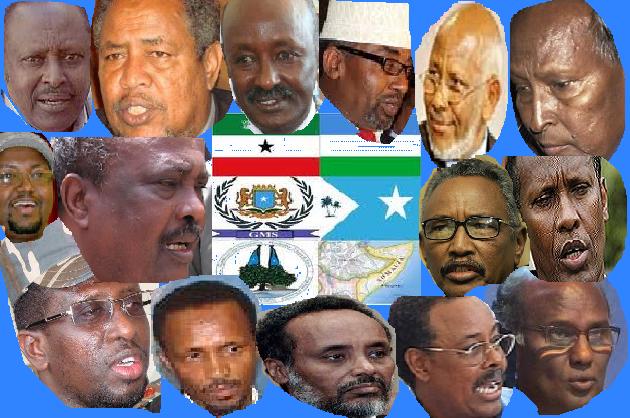

Carrab Lo'aad Caws Looma Tilmaamo

By C.S.Ismaaciil


Running as a Nation Watches
Roobdoon Forum
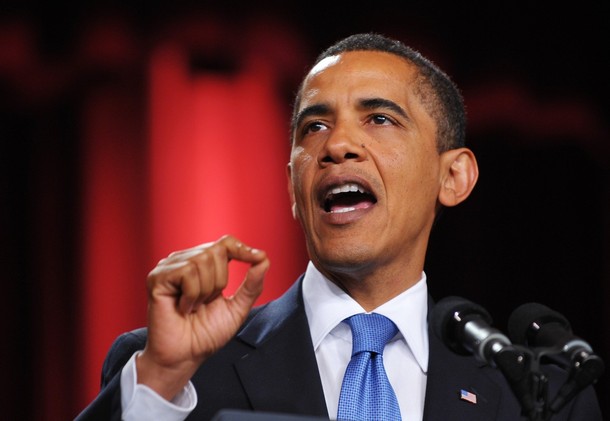
Obama
New Beginning
in Muslim World
Islaamist
Islamist Vs Islamist
Waliid
Hammiga Waliid & Hangoolka UNPOS

QP
Puntland: A Quisling Scheme
Roobdoon Forum


Somalia And The Gulf Of Aden: Piracy, Terrorism, And Ransoms
John Knott
Mondaq Business Briefing
January 11, 2010


The recent history of Somalia is more complex than that of most countries, involving three distinct regions, a multi-clan indigenous population, and almost twenty years of turbulence resulting from an absent or ineffective central government. With the country as a whole credited with having the worst humanitarian conditions in the world; with nearly one-half of its people starving; with over one million people internally displaced; and with the southern half of Somalia being effectively under the control of extreme, Islamic insurgents; one can understand that a solution to the problem of piracy at sea calls for more than the presence of a few dozen warships.1


Islamist Insurgents


But for the provision of over 3,000 troops by the African Union, the current Transitional Federal Government (“TFG”), created in January 2009 with United Nations` backing and based in Mogadishu, would have been over-run long ago. As it is, the TFG`s existence is precarious. It controls very little territory outside the capital`s port and airfield; its influence in most of the country is negligible; and the Islamist insurgents continue to gain ground. It is clear that the TFG`s early act of appeasement to the insurgents, in introducing a form of Sharia law, was a sign of weakness which merely encouraged the insurgents. The relatively few hopeful signs outside the autonomous north-west region of Somaliland—which is aiming at full independence—are that some of the moderate Islamists are now fighting the more extreme al-Shabaab element, and that the US and Kenya are supporting the TFG by supplying it with much-needed heavy weapons and ammunition.


The current President of Somalia, Sheikh Sharif Sheikh Ahmed, is a former head of the Islamic Courts Union (“ICU”), when he was regarded as a moderate chairman. Since then, the role of al-Shabaab has become a dominant one for much of Somalia. It was the armed branch of the ICU, which during 2006 controlled a large part of southern Somalia until temporarily routed by Ethiopian troops in early 2007. During 2008 the leadership of al-Shabaab formally declared allegiance to the proscribed organisation al-Qaeda; in February 2009 the US Government designated al-Shabaab as a Foreign Terrorist Organization under Section 219 of the Immigration and Nationality Act; and in March 2009 Osama bin Laden publicly expressed support for al-Shabaab`s aim of overthrowing the TFG, thus confirming al-Shabaab`s status as a terrorist organisation.


Pirates and Terrorists: Impact on Ransoms


The presence of terrorists in Somalia has given rise to concern and speculation about the legality of making ransom payments to resolve hijackings. Different legal systems have different laws concerning the payment of ransoms, but in the context of English domestic law the payment of a ransom in response to extortion is in principle legal, and has been for almost 200 years, since the reign of George IV.


Whether, notwithstanding this general principle, there may be reasons why in particular circumstances the payment of ransoms to Somali pirates may be unlawful, was a matter that was recently considered in great detail by the House of Lords` EU Committee in their July 2009 report Money laundering and the financing of terrorism [HL Paper 132-I]. Among the Committee`s conclusions was that the payment of a ransom should not be made a criminal offence [Paragraphs 164 and 222]. The Committee was, however, concerned about the possibility that the proceeds of Somali piracy might be financing terrorism [Paragraphs 167 and 223], and urged the Government to explore this possibility [Paragraphs 168 and 224].


In considering the weight to be attached to the Committee`s views, it is appropriate to have regard to the evidence which they received [HL Paper 132-II]—in particular, the evidence given by the Government—and to the material revealed in the subsequent debate in the House of Lords.


Written evidence given to the Committee by HM Treasury and the Home Office [in Appendix A to their Supplementary Memorandum 3], conceded that the existence of terrorist groups in Somalia was well known, but added “It is not thought at the present time that Somali pirates are connected in any systematic way to those terrorist organisations.” The Memorandum then speculated that “If in the future it were to become known that such a connection existed, then it might become the case that the knowledge or suspicion limb of the offence would be satisfied ...”, creating an offence under sections 15-18 of the Terrorism Act 2000.


In its written reply to the Committee`s report [Cm 7718, published in October 2009], the Government welcomed the Committee`s recommendation that the payment of ransoms should in principle remain lawful. On the question whether the proceeds of Somali piracy were financing terrorism the Government said that it saw this as a serious issue, and that it had “examined intelligence for evidence of links between piracy and terrorism at the highest level. To date we have no evidence that terrorists are using piracy as a means of raising funds ....” They would keep the situation under review.


In the subsequent debate in the House of Lords, in December 2009, Lord Brett (Parliamentary Under-Secretary of State, leading on Home Office EU Business), commented at some length on the topic. He said [Hansard HL Deb, 7 December 2009, c978]:


“The Government regularly examine all available intelligence for evidence of links between piracy and terrorism. I have to say that, to date, we have found no evidence. I sympathise with the view that one cannot see vast sums of money being passed around in Somalia without believing that some of it could be going to terrorist organisations in one form or another.


“However, we have found no evidence of any operational or organisational links. There is much open-source speculation—we are all a part of it. The noble Lord, Lord Skelmersdale, asked what we are doing to try to establish whether it is true. It has not been possible for any of our or our partners` intelligence agencies to corroborate it. Therefore, it is a question not of a country having a view, but of intelligence that we have been able to glean from allies, as well as from our own endeavours, failing to find any organisational or operational link.”


This is also the conclusion reached in numerous independent reports, and by organisations such as the International Maritime Bureau which make a particular study of piracy.


Speculation in the Press


One can read wild speculations almost every day in the press, recycled from one source to another—and given a measure of plausibility by those who see the hand of terrorism everywhere—about an organisational link between Somali piracy and terrorism. But HM Government`s position, set out above by Lord Brett, is very clear. Not only for the purpose of various international maritime conventions, but also in the context of the Terrorism Act 2000, and the Proceeds of Crime Act 2002, there is a very important distinction between piracy and terrorism.


Put broadly, piracy is undertaken for personal gain, while terrorism has a political motivation. Considered specifically in relation to the hijacking of ships, pirates typically seek to preserve the ships, cargo and crew, in order to extract the largest possible ransom payment in exchange for their release. A terrorist group, on the other hand, would typically aim to create an act of violence, probably involving the destruction of ship and cargo and the death of the crew, in order to promote its notions of acceptable behaviour towards elements of society, and to gain maximum publicity for its cause. The intention of the Somali pirates, as clearly shown by their procedures and the histories of their many hijackings, is to acquire large amounts of money. Ultimately, some of this money, in common with money from other sources, may at some time pass through the hands of other criminals or even terrorists; but that is merely an illustration of the way money circulates. In a similar way, some of the money in your pocket may ultimately pass into the possession of criminals, but that does not make you responsible for their activities, and it does not mean that you encourage or support them.


Moral and Practical Issues: The case against paying ransoms


Whether or not ransoms should be paid raises quite separate issues from whether a payment is lawful. When considered from a moral viewpoint, there is overwhelming support for not paying ransoms to pirates. Payment will enrich the pirates, so they can afford to continue to commit acts of piracy, and it will provide a positive encouragement for them and others to do so. With any ransom money that they receive they can acquire ever more powerful and more dangerous weapons, and they can purchase sophisticated technology to help them carry out further attacks. On land, an increase in successful piracy attacks will lead to pirates becoming independently wealthy and achieving a higher social status within their province. Making the pirates more powerful than the embattled government is liable to feed corruption. In the long term, the encouragement of further attacks will mean that more crew members will be endangered, which stands in direct contrast to the argument that paying ransom preserves the personal safety of crews. And the crew on board are not the only persons at risk. People involved in the physical transfer of ransom funds to the pirates are placing themselves in grave personal danger, despite their training and the precautions they take.


The Case for Paying Ransoms


There are, of course, points in favour of paying a ransom—otherwise ransoms would never be paid. A payment can normally be expected to bring about a swift resolution to a desperate situation and, most importantly, has the effect of minimising the physical and emotional strain on crew members and their families. The Somali pirates have made no secret of their willingness to use crew members as human shields in order to obtain and maintain control of ships, and they have from time to time made specific threats to kill European crew members following incidents involving the arrest and detention of fellow pirates. From a commercial viewpoint, the payment of a ransom ensures that a hijacked vessel can be returned to normal service as soon as possible, causing a minimal disruption to the owner`s trade and, in turn, world trade, which is of particular significance in the current world-wide economic situation.


There are in fact few alternatives to the payment of a ransom once a ship has been attacked and its crew have been taken hostage. A held ship generally cannot rely on assistance from naval forces. There have been some successful rescues, but the risks are considerable, and the histories of hijackings show that few nations are prepared to use force to achieve a resolution. Finally, the payment of a large ransom ensures that the issue of piracy continues to be given a global spotlight, and promotes the coming together of the global community to provide a long-term solution to the underlying problems of Somalia.


A ship hijacking illustrates in a dramatic way the difference between theory and practice. While one can argue that ransoms should in principle not be paid—the formal stance of most governments, and the position adopted by the United Nations Security Council in Resolution 1897, passed on 30 November 2009—it would be very difficult to oppose payment if that were the only feasible means of securing the release of one`s own family. Who among us would take a stand on principle in such circumstances? And if not for one`s own family, then why for another?


Footnote


1. A detailed account of the conditions within Somalia is given in the author`s paper “Somalia, the Gulf of Aden, and Piracy: An overview, and recent developments”, a revised version of which is available at: http://www.theamericanmuseum.org/may.09.eighth.html, (www.theamericanmuseum.org/may.09.eighth.html)


© Copyright John Knott, 2010.


The author is a consultant at the London head office of Holman Fenwick Willan LLP, who have been instructed in relation to over 40 of the commercial vessel hijackings that have occurred off Somalia since 2008, in addition to similar incidents elsewhere. This article is written in the context of English law, but is for information purposes only and does not constitute legal advice. Specific legal advice should be sought for particular situations on any aspects falling within the scope of the article.


Mr John Knott
Holman Fenwick Willan LLP
Friary Court

65 Crutched Friars
London
EC3N 2AE
UNITED KINGDOM
Tel: (0)2074882300
Fax: (0)2074810316
E-mail: James.huckle@hfw.co.uk
URL: www.hfw.com


© Mondaq Ltd, 2010 - Tel. +44 (0)20 8544 8300 - http://www.mondaq.com


The US as a great warrior tribe
Al Jazeera English
January 11, 2010


According to tribal Yemeni tradition, if a dispute has been resolved peacefully, any dagger that has been drawn cannot go back into its scabbard unless it tastes blood. Traditionally, an animal is slaughtered to satisfy its thirst and restore its holder`s honour.


Since the Cold War ended with the collapse of the Soviet Union and the Warsaw Pact without a single shot, let alone nuclear warheads, being fired, the `Greater Middle East` region has been turned into a real theatre of war.


From the Gulf war in 1991 through to the invasion of Iraq in 2003, from Somalia in 1993 to Yemen in 2010, and through Afghanistan and Pakistan, the US military has gone to great lengths to demonstrate its strategic capacity to act in faraway places and to prove its ability to guard and advance US and Western interests.


In no time, military means and out-right war and occupation replaced diplomacy and international law.


In return, the Pentagon`s budget has almost doubled from the level it was before 9/11 to surpass the combined military expenditures of all the countries of the world, all under the guise of the `global war against terror`.


Alas, the costly failures in Iraq and Afghanistan and other countries have demonstrated that the Muslim world is far too stubborn to be offered as a sacrifice in the pursuit of global leadership.


Tribal vs. state identities


Since then, the devastating wars of terror that have taken place in the shadows of accelerated globalisation have weakened state structures and institutions and reinforced tribal and sectarian identities. Regimes not directly affected, took preventative measures by strengthening their grip on power through increased security and tribal alliances.


The US and its regional allies have empowered and financed tribal leaders, as in Iraq and Afghanistan, to defeat unrelenting Islamist opposition or nationalist insurgencies, just as America`s enemies have tried to gain the support of tribes for their cause against the “foreigners”.


Washington followed in the footsteps of the UK, which boasts extensive experience of tribal politics in its former colonies, to arm and finance tribal leaders to fight its war in Iraq under the guise of “The Awakening” or ``The Sons of Iraq”.


Likewise in Afghanistan, where the US built on its long experience with the northern tribes in the 1980s to regain the initiative against the Soviet supported regime in Kabul.


In the process, salient - and not so salient - tribal power has been empowered in all the areas of conflict in the `Greater Middle East` by undemocratic leaders. Yemen, Libya, Jordan, Palestine and, even failed states like Afghanistan and Somalia, have witnessed the emergence of tribal loyalties and power.


But the failure of the US and its allies to attain stability - let alone to declare victory - has slowly but surely transformed the political landscape into a coalition of tribes or `a warrior ruling tribe` over many.


`Sons of America`


This transformation was not limited to the Middle East. Compromised by globalisation and market diktats, the most modern countries, such as the US, just like the least modern, such as Yemen, are increasingly acting in primordial ways and means.


As their sovereignty is compromised by multinational corporate decisions, capital, labour and investment movements, as well as communication and cultural globalisation, many states make up for their diminishing role over their economy and culture through alternative means of collective identities such as rallying their people around the flag.


With the advent of 9/11 and the `war on terror`, anger, humiliation and fear nudged the US into wars of `shock and awe`, revenge, torture, and rendition - stripping their `enemy-combatants` of their very humanity in far away prisons.


The politics of fear engineered by cynical racism and nationalism drove wars that have compromised traditional republican values and civil liberties just as its wars of choice undermined its `social contract` and whipped US citizens into a collective frenzy.


In short, the United States of America, the most powerful and advanced liberal democracy, began acting as the most aggressive of all the world`s tribes. And although much of this change was engineered by the Bush administration under the fog of the `war on terror`, Barack Obama`s election has defused war criticism, diminished the `peace movement` and once again united the country under the flags of war.


In the process, tribal loyalty replaced patriotism, revenge superseded legality, and “you`re either with US or against us” wrecked international solidarity and even sympathy with the US after the 9/11 attacks.


War without end


As asymmetrical warfare takes up the fight from conventional wars, battles are replaced by bombings and massacres, military bases by hideouts and remote control rooms, population control and policing by propaganda and terror, and national borders are surpassed by new fault lines passing through every minor Middle Eastern state and every major Western city.


As Afghans, Pakistanis, Yemenis and Somalis volunteer to fight and even die on behalf of their cause and collective identities, against corrupt autocratic regimes, demoralised soldiers and private contractors with fancy gear, who do you think wins at the end of the day?


Before you answer, consider two important lessons of asymmetrical war that have been ignored in the sweeping post-9/11 transformation.


Firstly, in the long term, loyalty, kinship, sacrifice and a sense of justice and belonging is more potent than firepower.


Secondly, “he who fights terrorists for any period of time is likely to become one himself”.


All of which begs for a change in the whole paradigm of the ongoing `global war on terror` that holds entire populations hostage to fear and war.


To be continued ...


© Copyright 2010 Al Jazeera English.


sawirro
Sawirro Somaliya

/
Bosaso

muqdisho
Muqdisho of Yesteryears and Today’s Muuq-disho


© Copyright   BiyoKulule Online All rights reserved®
Contact us administrator@BiyoKulule.com or roobdoon2000@yahoo.ca