We are preparing our forces to defend Somalia
Daily Monitor
Sunday, July 25, 2010

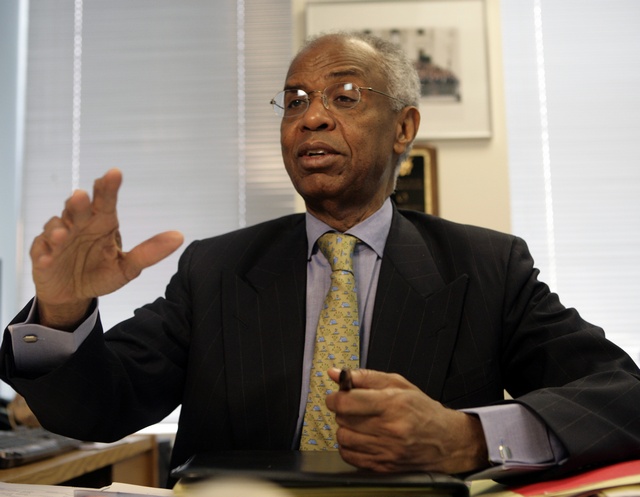
Somalia`s Minister of Defence, Abubakar Abdi Osman
Somalia`s Minister of Defence, Abubakar Abdi Osman, talked to Risdel Kasasira on the sidelines of the ongoing 15th Ordinary Summit of the African Union at Speke Resort Munyonyo about the situation in his country and how the Transitional Federal Government is coping:
How is the security situation in Mogadishu?
Before I answer your question, let me first say we want to thank our brother President Museveni and our Ugandan brothers and sisters for the commitment and love they have shown the people of Somalia. This country has sent her boys and girls to Mogadishu to help bring peace and stability in Mogadishu.
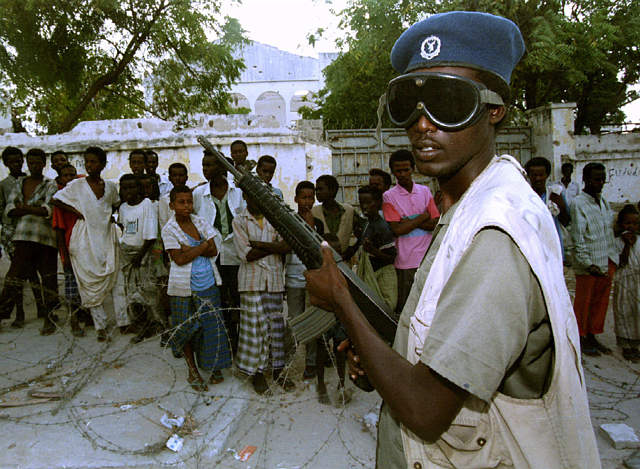
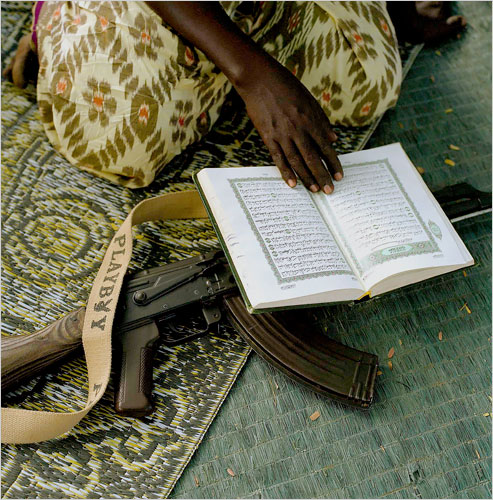
The situation is not good, frankly speaking. There has been heavy fighting for the last six months. It`s worsening. We have more al Shabaab trained from outside Somalia and brought to Somalia to fight. We have fighters from Afghanistan, Pakistan, Yemen, Europe and America. All these are criminals who are running away from justice in the countries they are fleeing. But we are also trying to fight them. It`s one and half years since we started training our soldiers to fight these enemies of peace in Mogadishu. We need time to train our forces. They must be trained to confront these enemies who are receiving weapons everyday with an intention of destabilising the region. They have been attacking government and Amisom. There is heavy fighting in Mogadishu but we and Amisom are on defensive.
Other than sending peacekeepers in Somalia, what else should African Union do to pacify Somalia?
I can say reconciliation. And we have already taken steps to make warring parties reconcile. After the Djibouti Conference that formed the current Transitional Federal Government, many warring parties reconciled. Al Suns Wajhmu were given five cabinet positions, ambassadorial positions and others that total to 37 positions. We are still pushing for reconciliation and peace talks.
What are some of the resolutions that you have prepared to present to the African Union heads of state summit which starts on Sunday?
The main resolution is to change the mandate of Amisom mission from peacekeeping to peace enforcement. We also request for additional forces in the first two weeks. We request for 2,000 troops in the next two weeks. During the Inter-Governmental Authority on Development (IGAD) meeting in Addis Ababa, they agreed that 2,000 soldiers should be sent to Mogadishu within a month. The proposal to change the mandate will be submitted to the summit by the IGAD member states.
Why has the Somali conflict been complex and hard to end?
It`s because we have foreign troops. We have terrorist groups coming from different parts of the country. All criminals, fugitives and wanted people runaway to Somalia. It has become a safe haven for the world`s most wanted people. Currently, there are 3,000 foreign fighters in Somalia. They are the ones supplying arms to al Shabaab. They are the ones blowing up people. They are the ones who killed our brothers and sisters in Kampala. It was really unfortunate that the people they blew up were not armed, people who were enjoying World Cup [final]. Terrorism has never been our culture. They confuse young boys and tell them to go blow themselves up.
Is it lack of capacity or commitment that African countries that had pledged forces to Somalia have not fulfilled their promise?
Uganda and Burundi have committed their resources to this cause. They sent soldiers and equipment. Recently, the European Union, United States have also come in to support the cause. But until now, we don`t know why those countries have not sent the peacekeepers. But we hope they do so soon.
Where do the al Shabaab get financial and weaponry support?
They are controlling over 3,000km of the Somali coastline. They have landing sites, seaports, airfields and they collect revenue. They get over 40 per cent of every ransom paid to the pirates. These pirates use the guns given to them by the al Shabaab. They are getting ransom money in exchange for the guns they give these pirates.
What is the level of the al Shabaab`s support in terms of public support and weaponry?
They have no strength. Their strength is terrorism. Their strength is ideological disorientation. They are now drugging young boys to carry out suicide bombings. They have committed these crimes in Kampala and Mogadishu. We have lost tens of thousands of people because of this violence in Somalia. We lost 23 medical students who were graduating [not long ago]. We have lost generals. We have lost professors.
We recently lost 24 women who were cleaning the city because the al Shabaab thought cleaning the city, would give credit to the government. We hope very soon, we can see peace in Somalia. We are trying to avoid retaliation whenever these enemies attack our positions because we are avoiding [civilian] causalities and destruction of infrastructure. We are preparing our forces to defend the people of Somalia.
However, we still call on them for reconciliation. Before you ask about the strength of the force, you must first know what kind of force are they? What is their ideology?
If their belief is killing, then you know they are not strong. What has happened to Uganda, has happened to us. We know they have been receiving battle wagons and anti-aircraft missiles.
Ugandan army to pursue Islamist Al-Shabab in Somalia – Museveni
BBC Monitoring Newsfile
July 25, 2010
Text of report by Al-Mahdi Ssenkabirwa entitled “President says UPDF will attack al Shabaab” published by leading privately-owned Ugandan newspaper The Daily Monitor website on 25 July, subheadings as published
President Yoweri Museveni yesterday said Uganda has a right to attack the Al-Shabab terrorists in self-defence. The president said by attacking and bombing civilians in Kampala, Al-Shabab had committed an act of aggression against Uganda.
In a statement released to the media yesterday, Mr Museveni said: “ The cowardly act of attacking our merry-making non-combatants on 11 July 2010, will make their situation worse.”
“In the past, we were only guarding the three installations as per the AU Force mandate. These reactionary groups have now committed aggression against our country. We have a right of self-defence. We shall now go for them.”
Saluting fighters
“I congratulate the heroic fighters of the UPDF and, particularly, their commanders on the ground: Maj-Gen Nathan Mugisha, Col Ondoga, Lt-Col Chemo, etc. I also salute our Burundi compatriots for their courage and Pan-Africanism,” he said
Mr Museveni, who describes the Al-Shabab as agents of mindless, cowardly Middle-eastern terrorism, said they will be defeated because they push for foreign interests.
“The UPDF will continue to punish these agents of foreign interests if they dare again to attack the positions of the AU forces, flying the flag of Africa,” he said
On Friday, the Africa Union Commission chairman, Mr Jean Ping said they would present a proposal to the heads of state to give the peacekeepers a new mandate to attack the Al-Shabab fighters in Somalia.
Way forward
In view of President Museveni`s comments it`s not clear whether Uganda will go ahead to attack Al-Shabab whether or not their peacekeeping mandate is changed to peace enforcing in Somalia.
The Al-Shabab claimed responsibility for the 11 July Kampala bomb attacks that left at least 84 people dead and over 50 others injured. Mr Museveni, in his statement said, the UPDF peacekeepers in Somalia have this week killed scores of the Al-Shabab fighters. He said among the dead were white-skinned people. “Africa should interest itself in knowing where those white-skinned people are coming from,” Museveni said
Source: Daily Monitor website, Kampala, in English 25 Jul 10
© 2010 The British Broadcasting Corporation. All Rights Reserved.
African leaders seek to beef up Somalia force
Daily News Egypt
July 25, 2010
KAMPALA: African Union leaders began a three-day summit in Kampala Sunday to boost the organization`s troop levels in Somalia and obtain a mandate to crush Islamist insurgents in the war-torn nation.
More than 30 heads of state from the AU`s 53 members gathered amid unprecedented security in the Ugandan capital, two weeks after suicide attacks in the city claimed by Somalia`s Shebab group killed 76 people.
Uganda`s president urged African Union leaders at a summit here Sunday to “sweep the terrorists” out of Africa.
“Let us now act in concert and sweep them out of Africa,” Yoweri Museveni said, referring to the perpetrators of the July 11 blasts in Kampala that killed 76 revelers watching the football World Cup final.
“Let them go back to Asia or the Middle East where I understand some come from,” he said at the opening of the three-day summit.
The AU summit observed two minutes of silence for the victims of the attacks.
“The African Union stands with you, my brother President Museveni, and with the people of Uganda,” Bingu wa Mutharika, Malawi`s president and current chairman of the AU, said in his opening remarks.
Museveni also said many of the organizers of the attacks in Kampala have been arrested.
“Their interrogations have yielded very good information,” he added.
Ugandan authorities have not been precise regarding the number of people detained for their suspected involvement in the blasts. Last week the inspector general of the Uganda police force, Kale Kayihura, put the figure at “more than 20” but several of those individuals have since been released.
The bombings that ripped through crowds watching the World Cup final were meant to bully Uganda into pulling out of the AU mission in Somalia (AMISOM), the last thing standing between the Shebab and total power.
Uganda reacted by saying it could send 2,000 more troops and urged more decisive international support, while the embattled Somali government argued the attacks were evidence Somalia required the world`s attention.
“Guinea is ready to immediately dispatch a battalion,” AU chief Jean Ping said at a press conference in Kampala on Friday. “We are going to quickly top the 8,000 mark... I think the current trend could take us over 10,000.”
Diplomats in Kampala say that Angola, Mozambique and South Africa may also pledge troops, whose current deployment consists of just over 6,000 Ugandans and Burundians.
The Shebab leadership has proclaimed its allegiance to Osama bin Laden and the group`s first bomb attacks outside Somalia renewed fears that the Horn of Africa country could become a new safe haven for Al Qaeda.
Ping also reiterated at the press conference that the African Union was seeking a tougher mandate for AMISOM under the United Nations Charter`s chapter seven, allowing it to take more aggressive action.
“If this request is answered positively, our troops will attack,” he said.
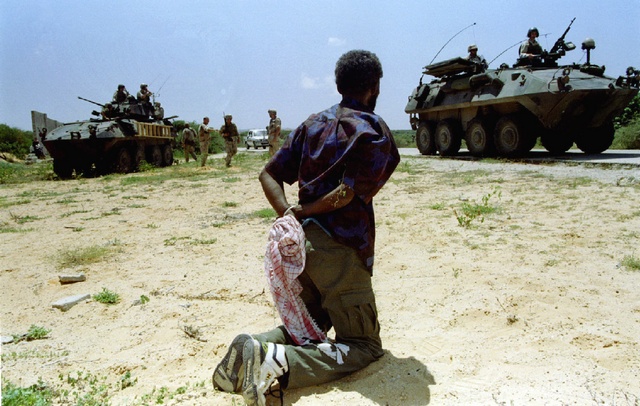
Troops from the United States and the United Nations have previously not been able to crush the insurgency in Somalia, which has been without an effective government for two decades.
Eritrea, which is under international sanctions and has been accused of supporting the Shebab, argues that the Islamist insurgency needs to be engaged at the negotiating table than on the battlefield.
“We believe that military involvement can not bring a peaceful solution,” Eritrean Foreign Minister Osman Saleh told AFP Friday on the sidelines of the pre-summit ministerial gathering.
The Shebab — as well as Mogadishu residents and rights groups — have criticized AMISOM for causing civilian deaths by shelling targets in densely-populated areas.
Analysts have warned a beefed up AMISOM mandate could make things worse.
“We are quite worried about the consequences of such an operation, because if they are engaged in quite an indiscriminate manner, they run the risk of playing in the hands of the Shebab,” said the International Crisis Group`s Ernst Jan Hogendoorn.
The continent`s leaders also discussed the future of Sudan, where the oil-rich south is due to hold a referendum on independence in January.
Sudanese President Omar Al-Bashir, whose movements have been under close scrutiny since the International Criminal Court issued a warrant against him over the war in Darfur, did not attend the gathering, AU sources said.
International Criminal Court indictments against Sudanese President Omar Al-Bashir are “undermining African solidarity and African peace and security,” the African Union president said Sunday.
“To subject a sovereign head of state to a warrant of arrest is undermining African solidarity and African peace and security that we fought for for so many years,” said Malawian President Bingu wa Mutharika, current head of the pan-African organization.
Mutharika urged his counterparts at an AU summit in Kampala to look for ways of resolving the conflict in Sudan without the need to arrest Bashir.
“There is a general concern in Africa that the issuance of a warrant of arrest for... Al-Bashir, a duly elected president, is a violation of the principles of sovereignty guaranteed under the United Nations and under the African Union charter,” he said.
“Maybe there are other ways of addressing this problem. Let us together explore this possibility.”
The ICC this month added a genocide charge to Bashir`s indictment, which also includes charges for war crimes and crimes against humanity related to the conflict in Sudan`s Darfur region.
© 2010 Egypt Daily News. All Rights Reserved.